TheSkiathos Guide
Skiathos Town, Skiathos
What to eat in Skiathos Wisniowy , NNeilAlieNN · CC BY-SA 4.0

16 dishes · Matched against 130 venues

What to eat in Skiathos

A menu glossary is easy to write. The useful part is the second half of each entry: which places on this island are actually known for the dish, drawn from our own notes on all 130 venues.

16Dishes explained
13With a venue known for them
€3–4.50A gyros pita
21:00When Greeks eat

How eating out works here

Sixteen dishes

What it is, the one thing worth knowing, and where on this island to eat it.

places on the island noted for the dish each chip is one of them, with 9.0 our score out of 10 the tinted line under a dish is the thing worth knowing

Moussaka

μουσακάς · moo-sa-KAS

Layered aubergine, spiced minced lamb or beef and potato under a thick béchamel, baked until the top sets golden. The dish everyone knows, and the one most often done badly for tourists — a good one is dense and rich rather than watery.

It is a lunch dish as much as a dinner one, and it is usually cooked in a tray in the morning. Ordering it at 11pm is not the way to meet it at its best.

Kleftiko

κλέφτικο · KLEF-tee-ko

Lamb slow-cooked for hours, traditionally sealed in a parcel or a clay pot with garlic, lemon and oregano until it falls off the bone. The name means 'stolen' — bandit food, cooked buried in a pit so the smoke would not give the thieves away.

Often needs ordering in advance at smaller tavernas, because it takes half a day.

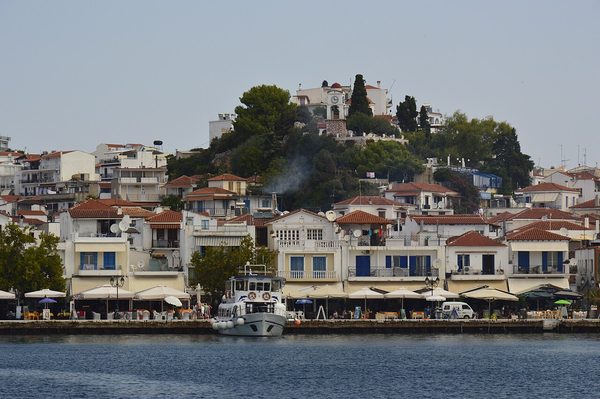
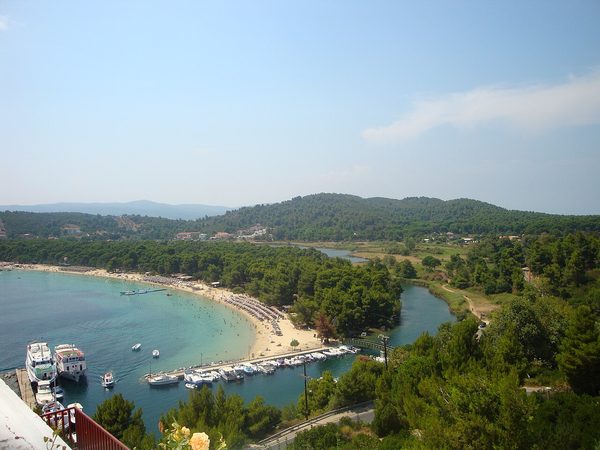
Small boats moored in a Skiathos bay
Boats in the bay Georgios Michalagas · CC BY-SA 4.0

Saganaki

σαγανάκι · sa-ga-NA-kee

Strictly the name of the small two-handled pan, not the dish. Usually means fried cheese; 'shrimp saganaki' is prawns in a tomato and feta sauce, which is a different thing entirely and one of the best plates on any Greek menu.

If a menu just says 'saganaki', it is the cheese.

Grilled octopus

χταπόδι · hta-PO-thee

Tenderised, often sun-dried on a line by the harbour, then charred over coals and dressed with oil, vinegar and oregano. The single most Aegean thing you can order.

If you see octopus hanging on a line outside a taverna, that is not decoration — it is that day's stock, and it is a good sign.

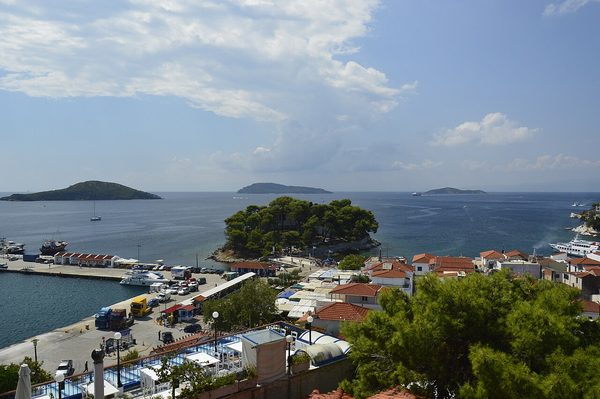
The waterfront at Skiathos Town
Skiathos Town. Most of these kitchens are within a few streets of here. Mrcsifkin · CC BY-SA 3.0

Tzatziki

τζατζίκι · dza-DZEE-kee

Strained yoghurt with cucumber, garlic and oil. Served cold, as a dip and as a counterweight to grilled meat.

It should taste aggressively of garlic. If it does not, it was made for visitors.

Places we have noted for it1

Dolmades

ντολμάδες · dol-MA-thes

Vine leaves rolled around rice, herbs and sometimes mince. Served warm with lemon and egg sauce, or cold with oil.

A test of a kitchen — the good ones are rolled by hand that morning and the difference is obvious.

Places we have noted for itNot a signature anywhere

No venue in our notes is known for this one. Almost everywhere serves it. It is simply not what any of them is known for.

Skiathos Town rooftops
Skiathos Town from the hill Mrcsifkin · CC BY-SA 3.0

Spanakopita

σπανακόπιτα · spa-na-KO-pee-ta

Spinach and feta in filo pastry. A bakery item as much as a taverna one, and the standard Greek breakfast-on-the-move.

Buy it from a bakery in the morning, not from a restaurant at night.

Places we have noted for itNot a signature anywhere

No venue in our notes is known for this one. Almost everywhere serves it. It is simply not what any of them is known for.

Fava

φάβα · FA-va

Not broad beans — split yellow peas, slow-cooked to a purée and served warm with raw onion, capers and a hard pour of olive oil.

One of the cheapest things on the menu and one of the best. Order it with bread and let it be lunch.

Places we have noted for it2

Keftedes

κεφτέδες · kef-TE-thes

Meatballs with bread, herbs and often mint, fried rather than baked.

The mint is the point. If they taste like Italian meatballs, something has been lost in translation.

Places we have noted for it1

Stifado

στιφάδο · stee-FA-tho

A slow stew — beef, rabbit or occasionally octopus — with a great many small whole onions, red wine, cinnamon and bay.

A winter dish that persists on summer menus. Order it on a cool evening and it makes far more sense.

Places we have noted for it1

Loukoumades

λουκουμάδες · loo-koo-MA-thes

Small yeasted doughnuts, fried and drowned in honey and cinnamon, sometimes with walnuts.

Late-night food. They are made to order and should arrive too hot to eat.

Places we have noted for itNot a signature anywhere

No venue in our notes is known for this one. Almost everywhere serves it. It is simply not what any of them is known for.

And to drink

What this page is, exactly

Frequently asked questions

What food is Skiathos known for?

Skiathos eats like the rest of the Aegean rather than having a distinct cuisine of its own: grilled octopus and squid, moussaka, souvlaki and gyros, slow-cooked kleftiko, and the meze plates — tzatziki, fava, saganaki. The one genuinely local product is Alypiakos, a red Muscat that the Evangelistria Monastery has again produced and bottled since 1998 after a 150-year break.

What time do people eat dinner in Skiathos?

Late. Demand at a town taverna builds from 20:00 and peaks between 21:00 and 22:00. A taverna that looks quiet at 19:30 is early rather than bad — though on a tourist island it is already about four-fifths as busy at 19:00 as at its 21:00 peak, so the effect is smaller than the cliché suggests.

How much does a meal cost in Skiathos?

A sit-down taverna dinner runs roughly €25–45 a head, and a meal for two at a typical taverna about €45–70 including local wine. A gyros pita is €3–4.50 and is a full meal. Skiathos is moderately priced by Greek island standards and clearly cheaper than Mykonos or Santorini.

What is the difference between souvlaki and gyros?

Souvlaki is small cubes of pork or chicken grilled on a skewer — in most of Greece the word means the skewer itself, and you ask for it 'in a pita' to get the wrap. Gyros is meat stacked on a vertical rotisserie and shaved off as it cooks, wrapped in pita with tomato, onion, tzatziki and chips inside the wrap.

Why is there no lettuce in a Greek salad?

Because there is not supposed to be. The Greek name, horiatiki, means village salad: tomato, cucumber, onion, pepper, olives, oregano and a slab of feta on top. A version with lettuce is a version made for tourists.

Keep exploring

All what to eat