The Skiathos Guide

By hour Β· By day Β· By month

Avoiding the crowds

Skiathos is small, its development sits on one road, and almost everyone moves in the same direction at the same time. That is annoying if you are in the flow and very easy to exploit if you are not.

17:00The beach exodus
21:00Dinner peak
17:30–19:00The quiet window
FridayHeaviest arrivals

The shape of a Skiathos day

Modelled for a peak-season Friday. Bars show relative demand, peak = 100.

At a beach

09:00
18
10:00
42
11:00
70
12:00
90
13:00
100
14:00
98
15:00
90
16:00
76
17:00
52
18:00
30
19:00
18
20:00
12

In a town taverna

17:00
50
18:00
62
19:00
78
20:00
95
21:00
100
22:00
88
23:00
44
These are the two curves that govern everything. Beach trade peaks in the early afternoon and drops steeply from about 17:00 as the buses fill. Town dinner builds through the evening to a peak at 21:00.

Note what the numbers actually say, because the clichΓ© overstates it: 19:00 already runs at about four-fifths of the 21:00 peak. Skiathos is a tourist island and plenty of visitors eat early, so the "nobody eats before ten in Greece" line does not survive contact with the data. The genuinely quiet window for dinner is 17:30 to 19:00, at around half of peak β€” and in summer that is also golden hour.

The 5pm problem, and how to beat it

The island has one road and one bus route along it. At about 17:00 the beaches empty back towards town all at once, and the result is standing room from Koukounaries inward. Buses can and do pass stops when full.

Three ways round it. Leave the beach before 16:30 and you will get a seat. Leave after 18:30 and you will get a seat, and a better swim β€” the light is better and the sand has cleared. Or go the other way: board at the Koukounaries terminus (stop 26), where the bus starts empty, rather than trying to get on at a stop halfway along.

If you have a ferry or a flight, do not rely on the bus at this hour. A 25–30 minute journey can take far longer when the bus is full and stopping everywhere, and there is no second route to fall back on.

Book dinner at the wrong time on purpose

Demand at a town taverna peaks between 21:00 and 22:00. A table at 19:00 to 19:30 runs at roughly three-quarters of that pressure β€” measurably easier to get, better served, and in summer it sits you in golden hour rather than after dark.

We should be precise about the size of that effect, because most guides are not. It is not the difference between an empty room and a full one. By 19:00 a Skiathos taverna is already busy; this is a tourist island and northern European visitors eat early. The gain is perhaps a fifth less pressure on the kitchen and a much better chance of the table you want β€” worth having, but not the dramatic advantage the "Greeks eat at ten" line implies.

The genuinely quiet window is earlier still, 17:30 to 19:00, at about half of peak. The trade-off there is real: the room will be sparse, because it is early rather than because it is bad.

Sunset and golden hour times by month β†’

By day of the week

DayRelative demandWhy
Sunday94Quiet
Monday90The trough. New arrivals have settled and the next wave has not landed
Tuesday92Mid-week, steady
Wednesday96Mid-week, steady
Thursday102Mid-week, steady
Friday112Peak charter arrivals β€” the busiest day, and the airport's worst for delays
Saturday108Changeover weekend

The differences are real but modest β€” roughly a fifth between the quietest day and the busiest. It matters most if you are choosing when to do the round-island boat trip or when to visit Kastro, both of which are far better without a crowd.

The version that actually works: change the month

Every trick above moves you a few percent. Changing the month moves you by half.

September has a warmer sea than June β€” 24Β°C against 22Β°C β€” because water lags air by about two months. It also has a fraction of the crowds after the first week, and lower prices. October's sea, at 21Β°C, is warmer than May's at 18Β°C, and October is one of the cheapest package months of the year.

The fortnight before 15 August is the single busiest and most expensive stretch on the island, because Dekapentavgoustos brings mass Greek domestic demand on top of international charters. If your dates are flexible at all, that is the fortnight to move.

All twelve months compared β†’

And the quiet places

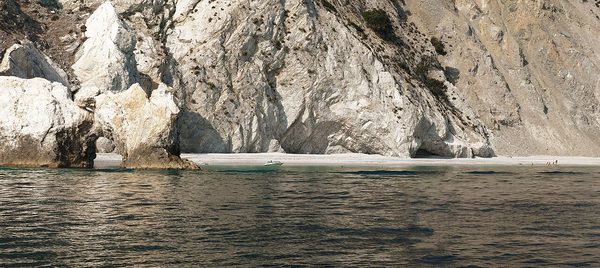
Beaches our dataset marks as usually quiet, all of them reachable without a boat:

Or use the beach finder β†’

Frequently asked questions

What time do Skiathos beaches get busy?

Beach demand builds through the morning and peaks in the early afternoon, around 13:00 to 15:00, then falls sharply from about 17:00 when people head back to town. Arriving after 16:00 gives you a quieter beach, better light and an easier bus.

Why is the Skiathos bus so crowded at 5pm?

The island has one road and one main bus route, so when the beaches empty at about 17:00 everyone travels in the same direction at once. Standing room is normal in July and August and buses can pass stops when full. Leave before 16:30 or after 18:30, or board at the Koukounaries terminus where the bus starts empty.

What is the best time to eat dinner in Skiathos?

Around 19:00 to 19:30 for the best balance β€” roughly three-quarters of the pressure of the 21:00 to 22:00 peak, easier to get the table you want, and in summer it sits you in golden hour. Be aware the effect is modest rather than dramatic: this is a tourist island and tavernas are already busy by 19:00. The genuinely quiet window is 17:30 to 19:00, at about half of peak.

Which is the quietest day on Skiathos?

Monday, by a small margin. Friday is the heaviest because it is peak charter arrival day, which is also why it is the airport's worst day for delays. The spread between quietest and busiest is only about a fifth, so it matters most for things like the round-island boat trip.

How can I avoid the crowds in Skiathos?

Change the month if you can β€” it is worth far more than any daily tactic. September has a warmer sea than June and a fraction of the crowds after the first week; October's sea is warmer than May's and it is among the cheapest months. Avoid the fortnight before 15 August, which is the busiest and priciest stretch of the year.