>
TheSkiathos Guide
Skiathos 11
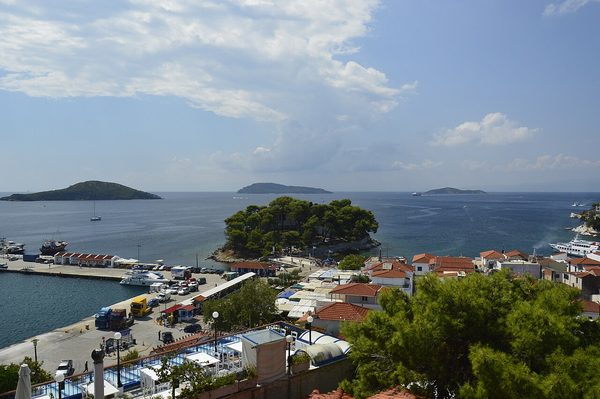
Are you ready for the AI age? Mrcsifkin ยท CC BY-SA 3.0

Free for every Skiathos business ยท Nothing to buy on this page

Are you ready for the AI age?

Travellers have started asking an assistant instead of scrolling a results page โ€” and an assistant cannot recommend a business it has no way to read. This page tells you where you stand and what to do about it. All of it is free, and most of it you can do yourself this week.

130Free reports, already written
โ‚ฌ0Cost to you, for any of it
87Businesses with no website yet
0Who paid for placement

What actually changed

A search engine ranks pages and sends you to one. An answer engine โ€” ChatGPT search, Perplexity, Google's AI Overviews โ€” does something different: it assembles an answer from sources it can parse and attribute, and most people never click through to any of them.

That difference is brutal for a business with no website. Under the old model you could still be found: your Google listing ranked, someone clicked it, they phoned you. Under the new one, you have no first-party source. An assistant asked "where should I eat in Skiathos Town tonight" can only describe you through third-party aggregates you do not control and cannot correct โ€” or, far more often, skip you and name a place it can quote.

On this island that is not a hypothetical. 87 of 130 venues have no website of their own, and 34 score below 40 out of 100 on the citability measure below. Only 29 score 70 or above.

The uncomfortable part. The businesses most exposed are often the best ones. A taverna with twenty years of reputation, no website, and a phone number passed between locals is invisible to a system that can only read what is published. Quality does not travel through a channel that cannot see it.

How we score citability

Six weighted signals. Every venue on the island has a result on each.

A website you control

The single biggest factor. Without one there is nothing for an assistant to quote that you can correct.

35weight

An unambiguous name

Two businesses with similar names on one small island get merged into one wrong answer.

15weight

Ratings that agree

When platforms disagree about you, summarisers either average them or quote the lowest.

15weight

Corroborating profiles

Social accounts confirm you exist and are trading โ€” a second source pointing at the same entity.

10weight

Bookable online

A booking path makes you an answer to a question with intent behind it, not just a name.

10weight

A review corpus

Volume of published text about you. It is the one signal most Skiathos venues already have.

15weight

Scored out of 100. It is a structural measure of whether a machine can find, parse and attribute a claim about you โ€” not a judgement of your food, and not a judgement of your business.

Your free report is already written

Every one of the 130 venues on this guide has one. Nobody asked for it and nobody paid for it.

Find your business in the guide, and your report is at the same name under /business/. Or email us and we will send you the link.

It contains four things:

  1. How you look online right now. Your website if you have one, your social accounts, and your ratings on Google, Tripadvisor and Restaurant Guru side by side โ€” including where those platforms disagree about you, which is more often than you would think.
  2. How findable you are to an AI assistant, scored out of 100 against the six signals below, with your result on each one shown separately so you can see which to fix first.
  3. When your customers actually arrive โ€” your week hour by hour, your five busiest windows, and your year month by month.
  4. What we would fix, in order. Most of it costs nothing and needs no one's help.
These pages are not public. They are set to no-index, so they never appear in search results and nobody can browse them. Your report is yours.

Five things to fix this week, for free

No website needed, no agency needed, no money. In rough order of how much difference each makes.

1. Claim your Google listing

Most Skiathos listings were created by Google or by a customer, not by the owner โ€” which means nobody can correct them. Search your own name, click "Own this business?", and verify. Free, and it is the single highest-value hour you will spend.

1hto do

2. Put your real opening dates on it

Half the island's listings still say "Open" in January. An assistant asked "what is open in Skiathos in May" reads those dates literally. Set your seasonal opening and closing dates and your daily hours, and update them when they change.

20mto do

3. Use one spelling of your name, everywhere

Two similar names on one small island get merged into a single wrong answer. Pick the exact spelling on your sign and use that identical string on Google, Facebook, Instagram and any booking site โ€” no "Taverna" on one and "Restaurant" on another.

30mto do

4. Write your own description

Three or four plain sentences: what you cook, where you are, when you open, what you are known for. Put the same text on every profile you have. This is the text an assistant will quote when someone asks about you, so it should be yours rather than a stranger's guess.

30mto do

5. Add ten good photographs

Of the food, the room, the view, and the outside of the building so people can find the door. Taken on a phone in daylight is fine. Listings with photographs are chosen over listings without them, every time.

1hto do

None of that requires a website, and none of it requires us. If you do only the first two, you will be ahead of most of the island.

When your customers actually arrive

This is the island's structure, and it is the same for everyone. Take it and use it.

We modelled the whole island hour by hour. You do not need to buy the model to use what it found โ€” the useful parts are short:

  • Friday is the heaviest arrival day. The charter flights stack up, which is also why Friday is the airport's worst day for delays. If you have one day to be fully staffed, it is Friday evening.
  • The beaches empty at 17:00. That is when the buses fill. Beach trade collapses; town trade has not started yet. That two-hour gap is the most under-used window on the island.
  • Town dinner peaks after 21:00, because that is when Greeks eat. It is already at roughly three-quarters of peak by 19:00 though, so the early sitting is real โ€” it is just not the busiest one.
  • The meltemi moves your customers. The summer wind is northerly. On a windy day the north coast loses its trade and the south coast gains it, and neither side is doing anything differently.
  • 15 August is not like the rest of August. Dekapentavgoustos brings a mass domestic migration to the islands, stacking Greek demand on top of the international peak.
  • Beach venues go to zero in winter because they are shut, not because they are quiet. If your listing says otherwise, see point 2 above.

The code and every assumption behind it are in assets/demand.js?v=202608221455, including the ones we are least confident about. Argue with any of them.

The part most agencies would leave out

We do not have your traffic. Nobody does. Web analytics for businesses at this scale are not published, and any agency that shows you a confident visitor number for your restaurant has either bought a modelled estimate and stripped the error bars off it, or invented it.

So we separate two things on every page and we never blur them:

Measured. Your ratings, review counts, website and social presence. We checked these against published sources and dated them. They are facts.

Modelled. When demand arrives. This is inferred from the structure of the island โ€” the season curve, the charter week, the bus timetable and the 17:00 beach exodus, Greek meal times, and the ferries, flights and cruise calls that land blocks of people at the New Port. Every coefficient is documented and every assumption is labelled as one.

The model is useful because the structure is real and it is the same structure for everyone. It is not a substitute for your own figures. Give us one month of your own covers and it stops being a model and starts being calibrated โ€” and we will tell you how far off we were.

How the demand model works

Six inputs, all of them derived from research published elsewhere on this site:

  • Season. A monthly index built from published opening and climate data, peaking in August. Beach venues drop to zero in winter because they are shut, not quiet.
  • The charter week. Friday is the island's heaviest arrival day โ€” which is also why it is the airport's worst day for delays, since the binding constraint there is aircraft stand availability.
  • Hour of day, by venue role. A beach bar and a hilltop taverna are not the same business. Beach trade peaks in the early afternoon and collapses at 17:00 when the buses fill; town dinner service builds from 20:00 and peaks after 21:00, because that is when Greeks eat.
  • Arrivals. Ferries, flights and cruise calls each land a block of people, which decays over the following hours and reaches different zones of the island to very different degrees. Cruise passengers on a short call mostly never leave the waterfront.
  • The meltemi. The summer wind is northerly, so on a windy day the north coast loses its trade and the south coast gains it.
  • 15 August. Dekapentavgoustos triggers a mass domestic migration to the islands, stacking Greek demand on top of the international charter peak.

The code is in assets/demand.js?v=202608221455 and the assumptions are commented in it, including the ones we are least sure about. You are welcome to argue with any of them.

Live schedules

The model takes ferry, flight and cruise arrivals as an input. There is no single free public API for any of the three on a small Greek island: ferry timetables sit behind commercial aggregator agreements, cruise calls come from port-agent and commercial schedules, and flight data comes from the airport operator or a commercial provider.

The pipeline is built as adapters behind one normalised schema, so switching provider changes one mapping function and nothing else. Right now it is running on an illustrative sample schedule โ€” realistic in shape, fictional in detail, and labelled as such on every page it touches. Nothing in the demo pretends to be a real sailing.

Something wrong on your page? Tell us

Your listing on this guide was written before we ever contacted you. It is free, it has always been free, and no business on this island has paid for placement, for a score, or for a kinder write-up.

If anything we have published about you is wrong โ€” your hours, your closing dates, your name, the write-up itself โ€” tell us and we will fix it. That is not conditional on anything, and it does not involve a conversation about buying something.

For the record, because you would rightly want to know: we build websites, and some of the 87 businesses here without one may eventually want ours. That is the whole of our commercial interest. If you never speak to us, your page stays exactly as it is, at exactly the same score.

Frequently asked questions

Do you have my restaurant's website traffic?

No, and nor does anyone else. Analytics for businesses at this scale are not published. Any agency showing you a confident visitor number for a single restaurant has bought a modelled estimate and removed the error bars, or made it up. We separate what we measured โ€” your ratings, website and social presence, all dated โ€” from what we modelled, which is when demand arrives.

How can you know when my restaurant is busy?

We do not know, we model it, and the page says so. The model uses the island's structure rather than your data: the season curve, the fact that Friday is the heaviest charter arrival day, the bus timetable and the 17:00 beach exodus, Greek meal times, ferry and cruise arrivals at the New Port, and the meltemi. Give us one month of your own covers and the model can be calibrated against reality.

What is an AI visibility score?

A measure of how citable your business is to an answer engine such as ChatGPT search, Perplexity or Google's AI Overviews. Those systems assemble answers from sources they can parse and attribute rather than ranking pages, so a business with no website of its own has no first-party source โ€” it can only be described through third-party aggregates it does not control and cannot correct.

Did any business pay to be listed or rated?

No. Not one. Every venue on the guide was researched and scored before any contact was made, placement is not for sale, and a business working with us commercially gets exactly the same editorial treatment as one that never replies.